
The researcher's opinion is never the problem. Knowing where to use it is.
A framework I’ve been quietly refining for 20 years.
A few weeks ago, I wrote about research blind spots — the ones that quietly distort findings before anyone notices.
Several people responded. But the question that stayed with me longest wasn’t about blind spots at all.
It was this: So should researchers have opinions?
I sat with it for a while before I realised — that’s the wrong question.
The researcher’s opinion is never the problem. Knowing where to use it is.
The debate misses the point
Most discussions about researcher objectivity land in one of two camps.
Camp one: researchers should be neutral. Opinions equal bias. Keep yourself out of the work. Be the instrument, not the interpreter.
Camp two: neutrality is a myth. You’re always in the room. Your background, your training, your instincts — they shape what you notice, what you ask, what you find worth pursuing. Own it.
Both are partially right. Both are incomplete.
Because the real question isn’t whether you have an opinion. You always do. Twenty years of experience doesn’t make you more objective — if anything, it makes your instincts faster, your pattern recognition sharper, and your blind spots harder to notice, precisely because they feel so much like expertise.
The question is what you do with that opinion at each step of the work.
And that answer changes — depending on where you are in the process.
A note on context
Before I share the framework, one thing worth naming.
I’ve spent most of my career on the agency side — commissioned by clients to research their products, their users, their problems. That context shapes everything I’m about to say.
When you’re an external researcher, the work is never about what you find interesting. It’s about what your client needs to know. Your role is defined by someone else’s question. The boundaries are set before you walk in.
That’s very different from an in-house researcher embedded in a product team, where the lines between researcher, advocate, and decision-maker can blur in ways that are sometimes useful and sometimes not.
Both contexts are valid. But they create very different pressures around opinion and objectivity. If you’re reading this from an in-house perspective, some of this will land differently — and that’s exactly as it should be.
Step 0 — The foundation everything else rests on
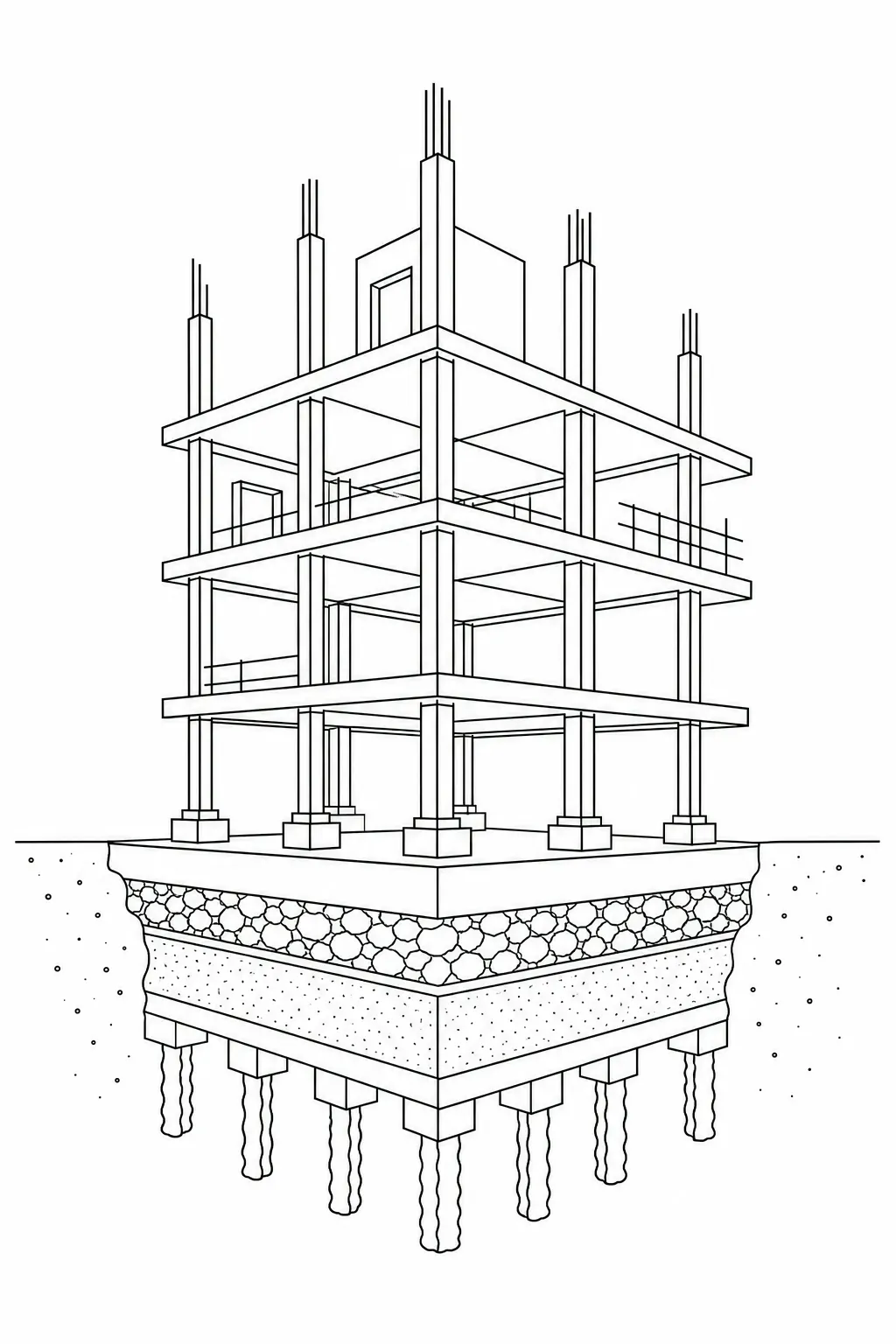
Before anything else, there’s a set of beliefs that has to be in place.
Research design matters more than most people acknowledge. A poorly designed study doesn’t just produce weak findings. It produces confident, well-structured, consistently biased findings — all the way from data collection through analysis to the final report. That kind of finding is harder to recover from than no research at all, precisely because it looks credible.
And findings always have limits. Knowing what your data can and cannot tell you matters just as much as the findings themselves. The boundaries of your evidence are part of the evidence.
This is the foundation. If these beliefs aren’t in place, the rest of the framework doesn’t hold. The steps that follow are only as good as the ground they stand on.
Step 1 — Align your opinion to the research purpose
The moment a project begins, I do something deliberate.
I set my personal opinions aside — not permanently, but specifically. I switch my frame to the research purpose and the defined scope. What are we trying to find out? What questions are we actually here to answer? What falls outside this study, no matter how interesting it looks?
This matters more than it sounds. Research can drift. It follows the loudest stakeholder, the most interesting tangent, the finding that happens to confirm what everyone already suspected. Staying anchored to the original purpose is not about being passive or incurious. It’s about protecting the integrity of the work from the very beginning.
This is especially true when you’re working on someone else’s product, someone else’s market, someone else’s users. Your personal interests are not irrelevant — they inform your instincts and your framing. But they cannot be allowed to steer the inquiry. The research is not about what you find fascinating. It’s about what your client or team genuinely needs to understand.
Step 2 — Use your instincts as a framework, not a conclusion
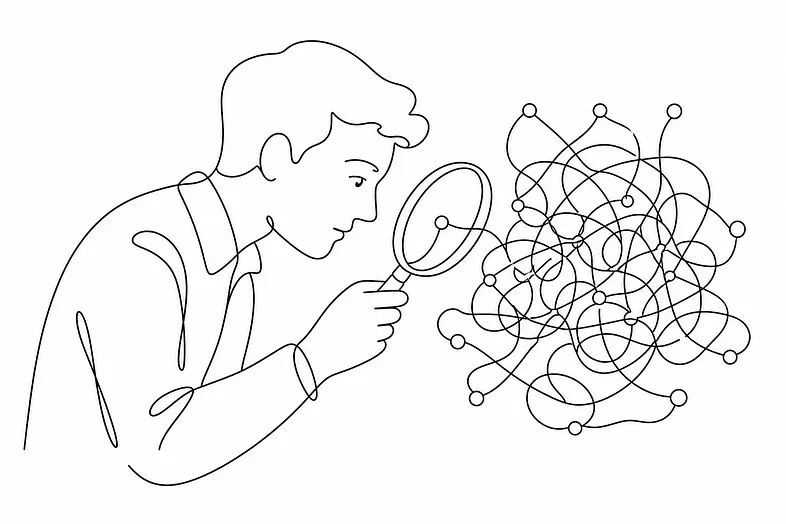
This is where it gets harder to explain. And where I think most researchers either oversell or undersell themselves.
During data collection and analysis, I rely on my instincts. Not as conclusions — never as conclusions at this stage — but as a navigational tool. A quiet frame for noticing what’s worth paying attention to. A compass when the data is ambiguous or when something unexpected surfaces.
I know this sounds unscientific. I want to be honest about that tension, because I’ve felt it myself.
But I’ve come to believe that instincts built on solid, consistent research practice — the kind that accumulates slowly over years of careful, disciplined work — are more reliable than they first appear. They’re not random. They’re pattern recognition that hasn’t yet been fully articulated. They’re the residue of everything you’ve seen before, asking you to pay attention.
The key phrase is built on. Instinct without foundation is just bias wearing confidence. Instinct with foundation is something closer to expertise — imperfect, fallible, but genuinely useful when handled honestly.
What I’ve learned to do: when my instinct is pointing at something, I make it earn its place. I look for evidence. If the evidence supports it, the instinct was a useful guide. If the evidence pushes back, I’ve caught a bias before it became a conclusion. Either way, something useful happened.
Step 3 — This is where you sit on it

When findings start to emerge, this is the moment I work hardest to keep my opinions in check.
Everything needs evidence. Every conclusion has to be traceable back to the data. If something feels true but cannot be supported, I don’t present it as a finding. I flag it as a direction worth exploring in a future study — and I’m transparent about why.
When something anomalous appears — a finding that surprises me, or one that contradicts what I expected — my first move is never to trust it or to dismiss it. It’s to go back. Check the research design. Examine the analysis process. Ask honestly whether there’s a flaw I missed, or a blind spot I brought in without noticing.
This step is also where the most uncomfortable thing can happen.
Sometimes the anomalous result supports your personal expectation. Sometimes the surprising finding is exactly what you were hoping to find. And that quiet, private moment of satisfaction — that small internal sense of I was right — is precisely when you need to be most careful.
The data has to hold up on its own. Not because it confirms what you believed. Because the evidence genuinely supports it. Those are not the same thing, and the distance between them is where research quality lives.
Step 4 — Now your opinion becomes an asset
After all of that — the anchoring, the restraint, the honest self-examination — something useful happens.
By the time I reach the reporting stage, I almost always have a clear sense of where my personal perspective ends and where the objective findings begin. The process has done that clarifying work along the way. The opinion hasn’t disappeared. It’s been placed.
And that clarity is what makes professional judgment genuinely valuable at this stage.
If the findings contradict the original research purpose, say so directly. Explain what you observed and why it matters. Propose what further research would be needed to understand it fully. And be especially careful — more careful than usual — if that contradiction happens to align with something you personally hoped to find.
If the findings support the purpose, present the evidence fully and let it speak before you do.
And sometimes, your accumulated experience becomes the strongest supporting argument available. I’m confident in this pattern, because I’ve seen it repeat across multiple related studies over the years. That’s not bias. That’s domain knowledge, used honestly and transparently — with the evidence still doing the primary work.
The opinion doesn’t disappear. It finds its place.
This is the part that gets lost when people argue about researcher objectivity.
Your opinion is not something to eliminate. It is something to place correctly — at the right step, in the right role, in service of the work rather than in front of it.
At Step 1, it steps aside to protect the research purpose. At Step 2, it works quietly as a navigational tool. At Step 3, it waits — and gets examined honestly. At Step 4, it shows up grounded, earned, and in support of findings that can stand without it.
The researchers I’ve seen struggle are rarely the ones with too many opinions. They’re the ones who don’t know which step they’re in — who bring Step 4 confidence to a Step 2 moment, or who suppress their instincts entirely when those instincts were exactly what the analysis needed.
And the most dangerous researchers?
They’re not the ones with strong opinions.
They’re the ones who believe they don’t have any.
This is part of a series on UX research — the parts the industry doesn’t talk about enough. If something here shifted how you think about your own practice, even slightly, that’s enough. The next piece looks at a question I get asked more than almost any other: when should you trust your gut over your data?